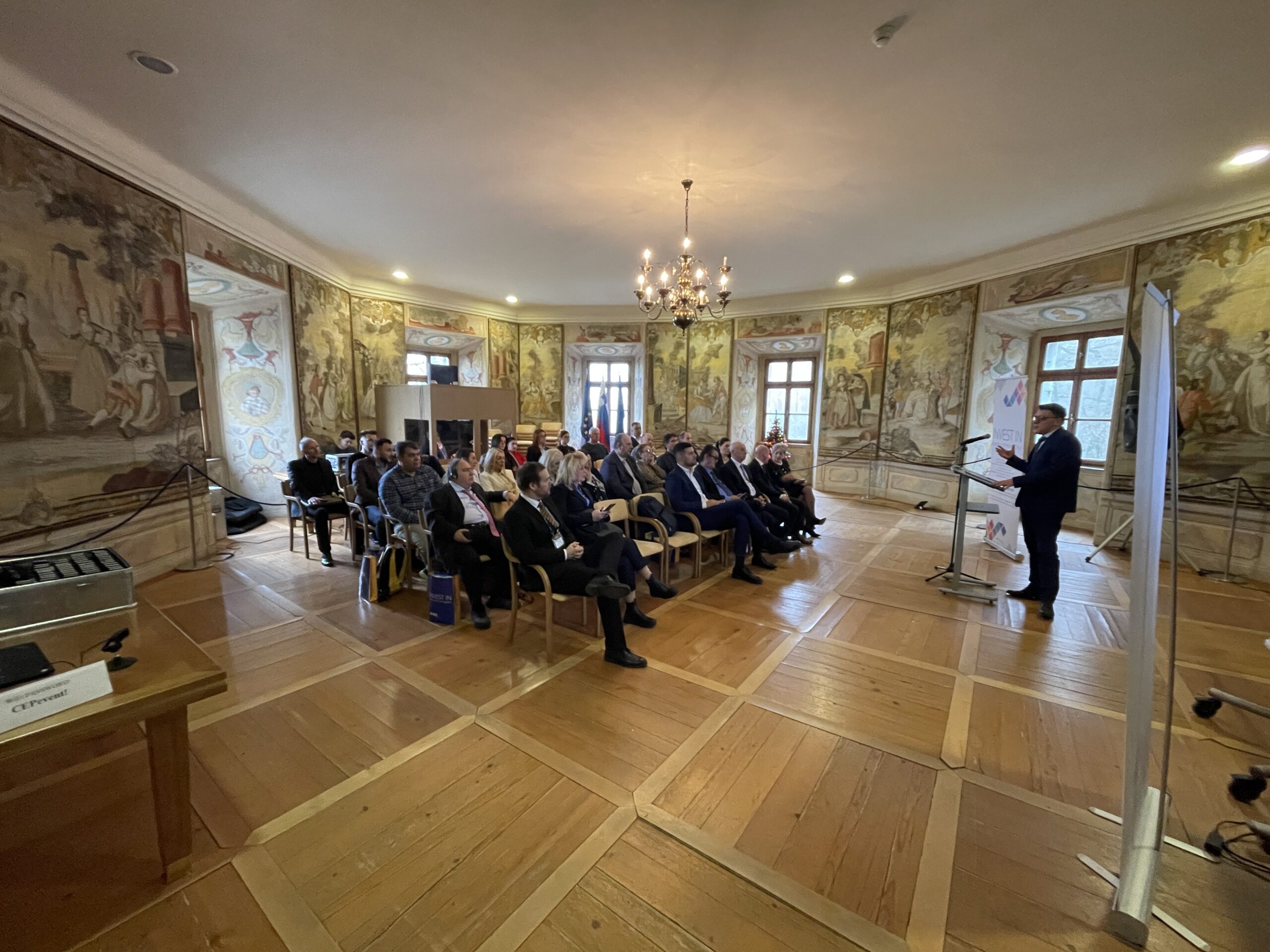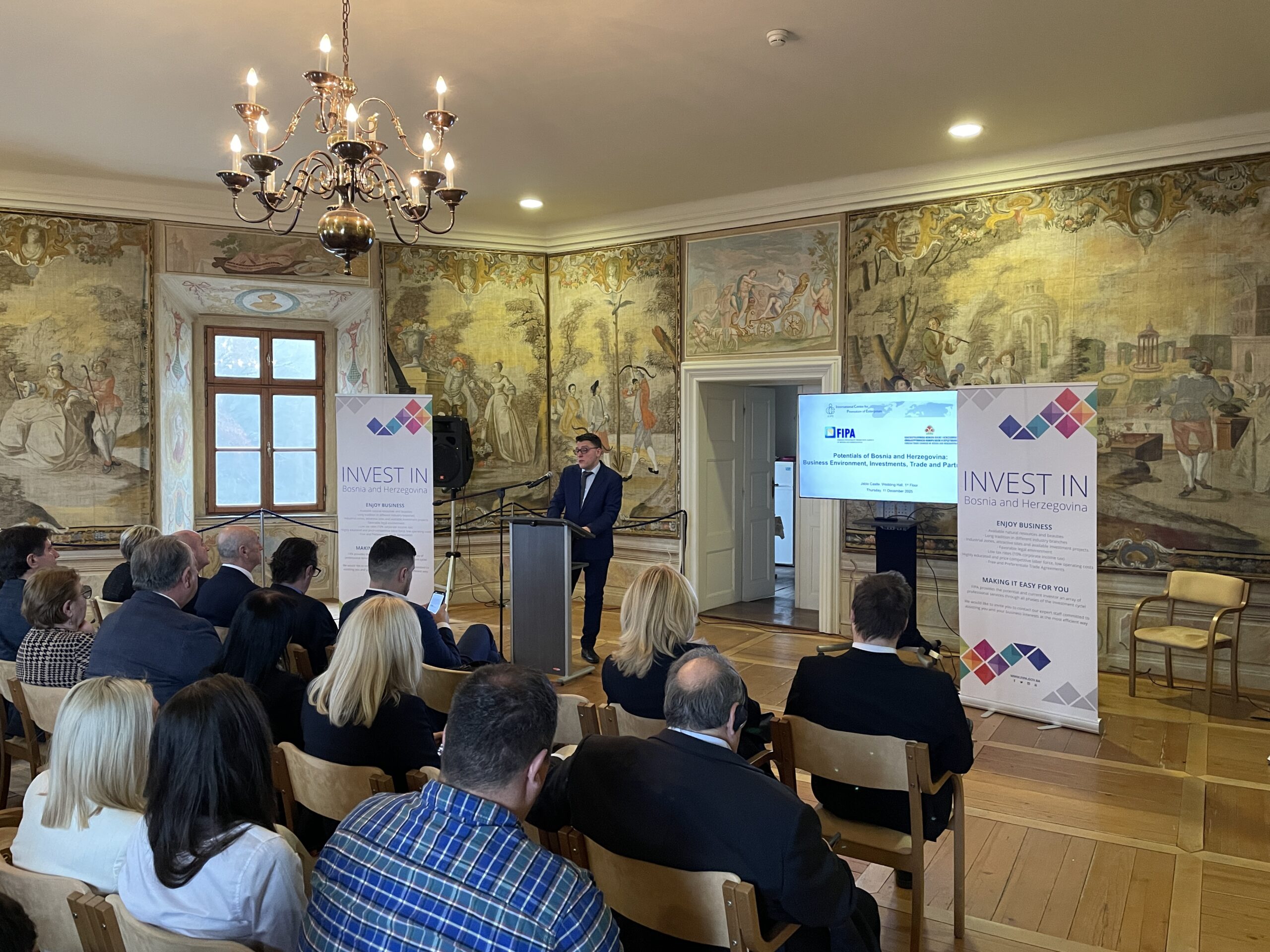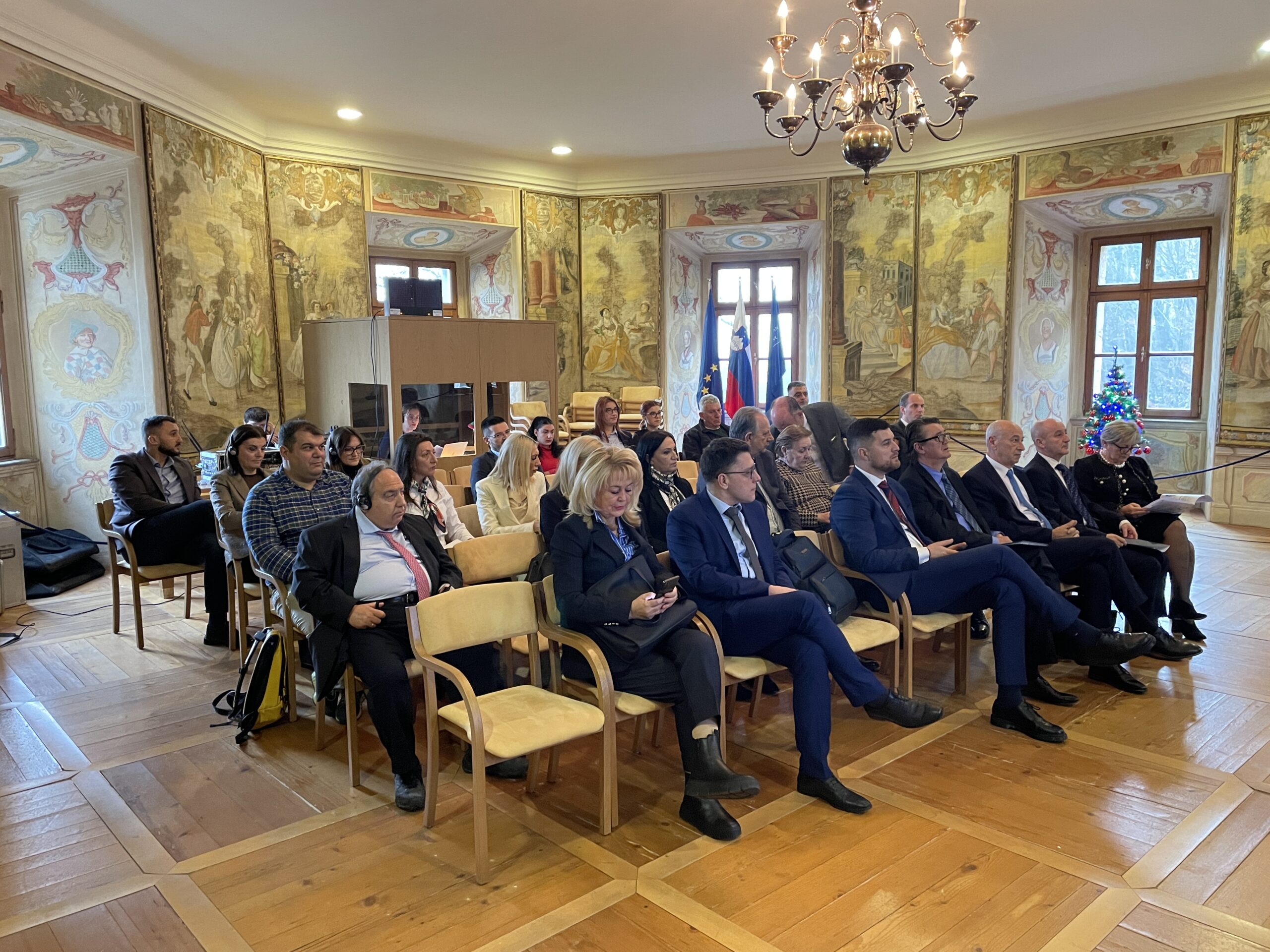
On Thursday, 11 December 2025, the International Center for Promotion of Enterprises (ICPE), in cooperation with its partners the Foreign Investment Promotion Agency of Bosnia and Herzegovina (FIPA) and the Foreign Trade Chamber of Bosnia and Herzegovina (FTC), hosted the event “Potentials of Bosnia and Herzegovina: Business Environment, Investments, Trade and Partnerships” at Jable Castle in Mengeš. The event brought together representatives of governmental institutions, investment support organisations, companies and students of International Business, providing a platform for exchange on economic cooperation and partnership opportunities related to Bosnia and Herzegovina.Lorem ipsum dolor sit amet, consectetur adipiscing elit. Ut elit tellus, luctus nec ullamcorper mattis, pulvinar dapibus leo.
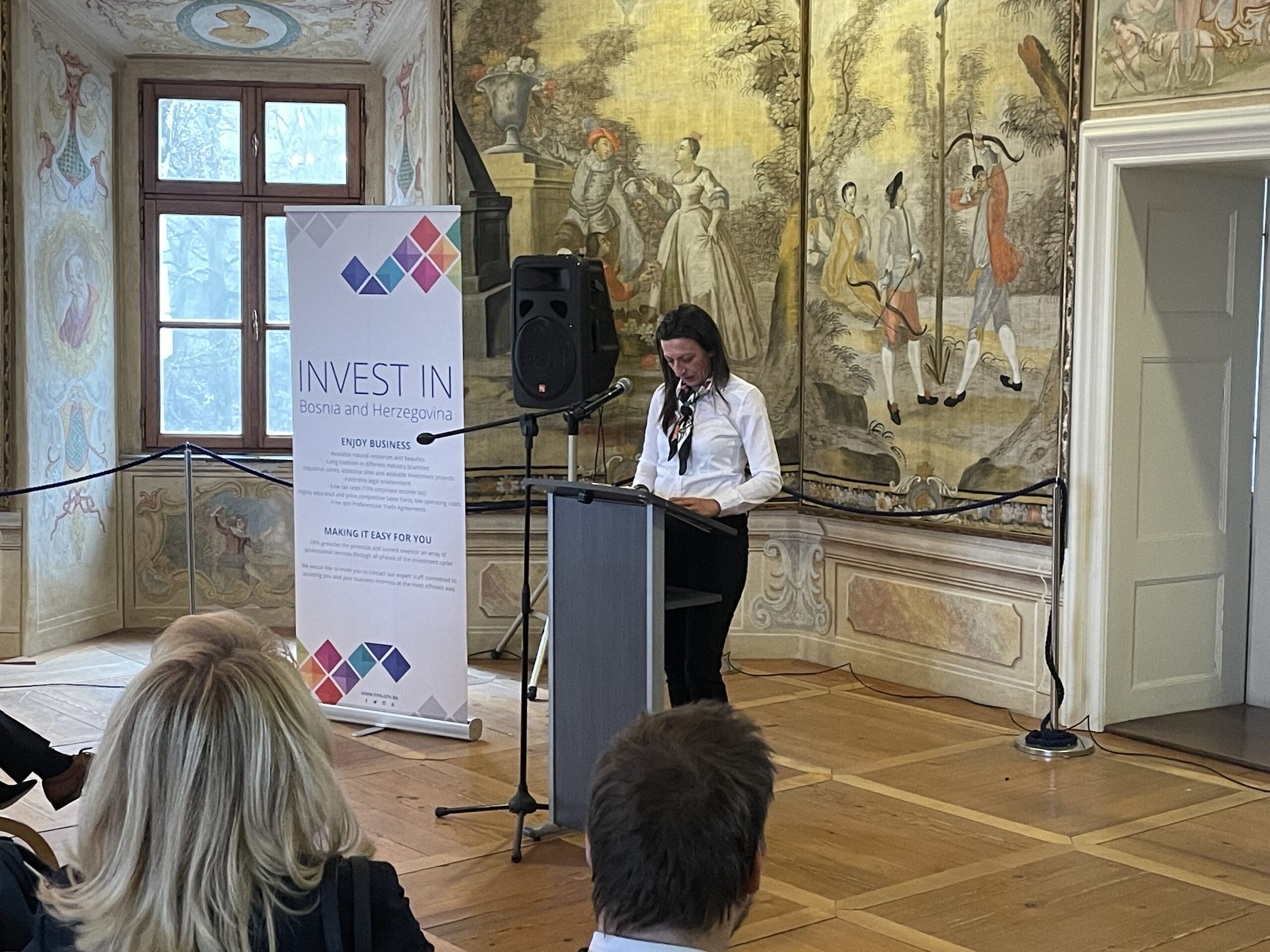
The event opened with welcome addresses by David Tavželj, Executive Director of ICPE, His Excellency Dario Novalić, Ambassador of Bosnia and Herzegovina to the Republic of Slovenia, Marko Kubatlija, Director of FIPA, Zdravko Marinković, Vice President of the Foreign Trade Chamber of Bosnia and Herzegovina, and Đorđe Dimitrijević, Member of the Board of the Slovenian Business Association in Bosnia and Herzegovina.
The first part of the programme focused on the economic, investment and trade environment in Bosnia and Herzegovina.
The presentation on behalf of FIPA was delivered by Ms Slavica Korica, Deputy Director, who outlined key macroeconomic indicators, recent foreign direct investment trends and the institutional support framework available to foreign investors. She highlighted Bosnia and Herzegovina’s strategic geographical position, preferential access to regional and EU markets, stable currency regime, competitive tax structure and labour costs, as well as FIPA’s role as a central point of contact providing free and tailored assistance to investors throughout all phases of the investment process.
The trade and export perspective was presented by Mr Enes Ališković, Director of the Export Promotion Agency of the Foreign Trade Chamber of Bosnia and Herzegovina, who provided an overview of Bosnia and Herzegovina’s foreign trade structure, export performance and sectoral strengths. Particular emphasis was placed on manufacturing industries, including metal processing, electrical equipment, machinery and wood and furniture production, as well as on opportunities for deeper integration into regional and European value chains. Slovenia was highlighted as one of Bosnia and Herzegovina’s most important trading partners, with further potential for industrial cooperation and joint ventures.
Experiences of Slovenian companies operating in Bosnia and Herzegovina were discussed by Mr Đorđe Dimitrijević, who drew on long-term operational experience in the market. He noted that business opportunities in Bosnia and Herzegovina are expanding and that interest from Slovenian companies remains strong, while also pointing out that there is room for improvement, particularly in the areas of digitalisation of administrative procedures and further simplification of regulatory processes.
The second part of the programme was dedicated to foreign direct investment oriented project presentations, showcasing concrete initiatives with development and investment potential.
The Prime Residence Health Center project was presented as an integrated healthcare and rehabilitation centre focused on robotic neurorehabilitation and specialised medical services. The project foresees the development of a modern facility with advanced medical equipment, accommodation capacities and supporting services, positioning it as a regional hub for health tourism and specialised rehabilitation, with clearly defined investment models and phased implementation.
An innovative seawater distillation system powered by renewable energy was presented. The project is based on wind-powered mechanical vacuum generation combined with mechanical vapour recompression, enabling desalination at low temperatures with minimal energy consumption and zero CO₂ emissions during operation. The system is designed as an off-grid solution suitable for coastal areas, islands, remote communities, tourism facilities and humanitarian or crisis situations, with scalable production capacity and strong relevance for water-stressed regions globally.
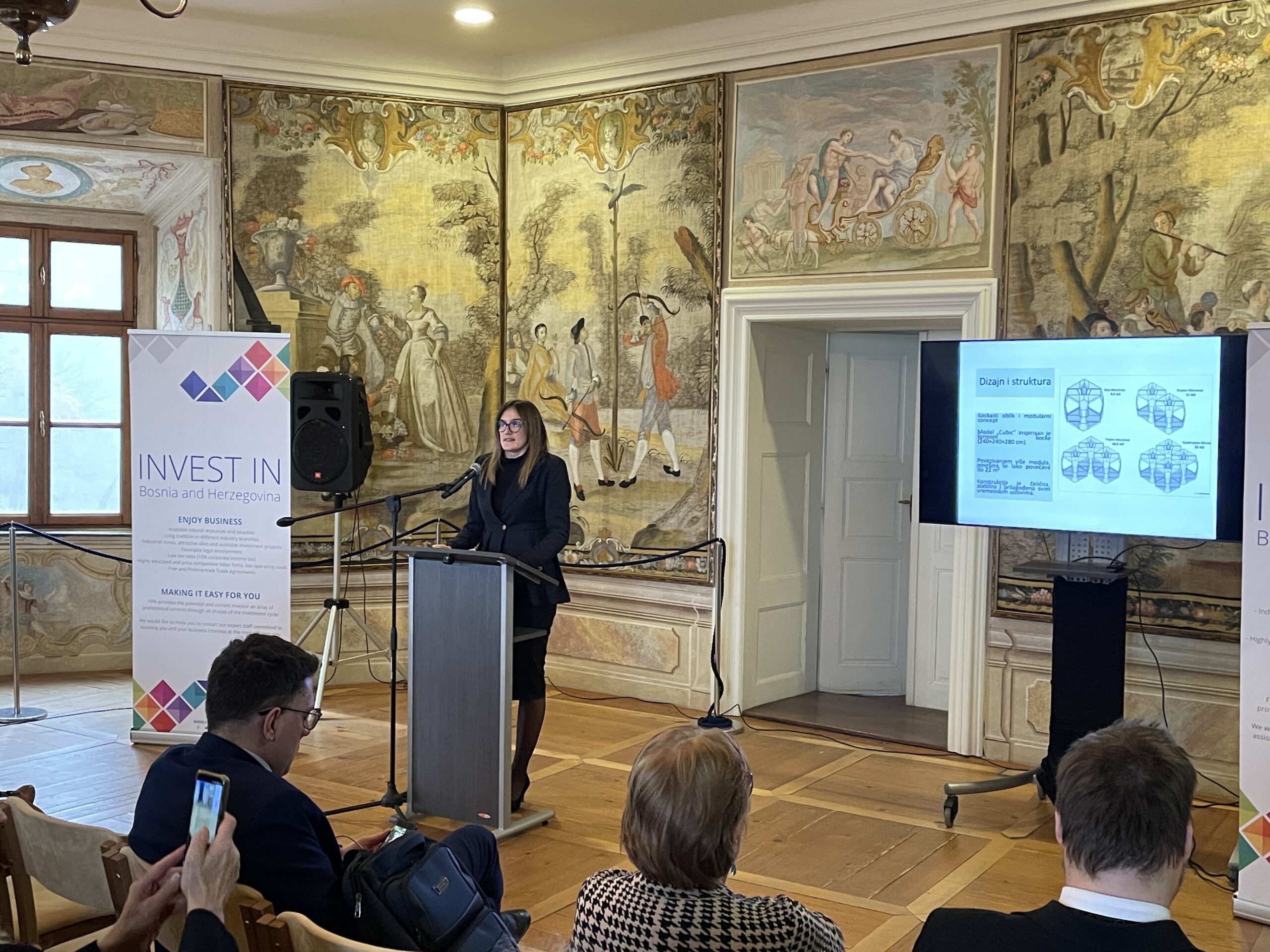
The Cubic Style modular solar kiosk project was introduced as a flexible, self-sustaining infrastructure solution suitable for retail, services, exhibitions and public use. The modular steel construction, powered by integrated solar panels, allows rapid installation, mobility and scalability, with production costs designed for serial manufacturing. The project was presented as open for joint ventures, licensing or production partnerships, including potential localisation of manufacturing in Bosnia and Herzegovina.
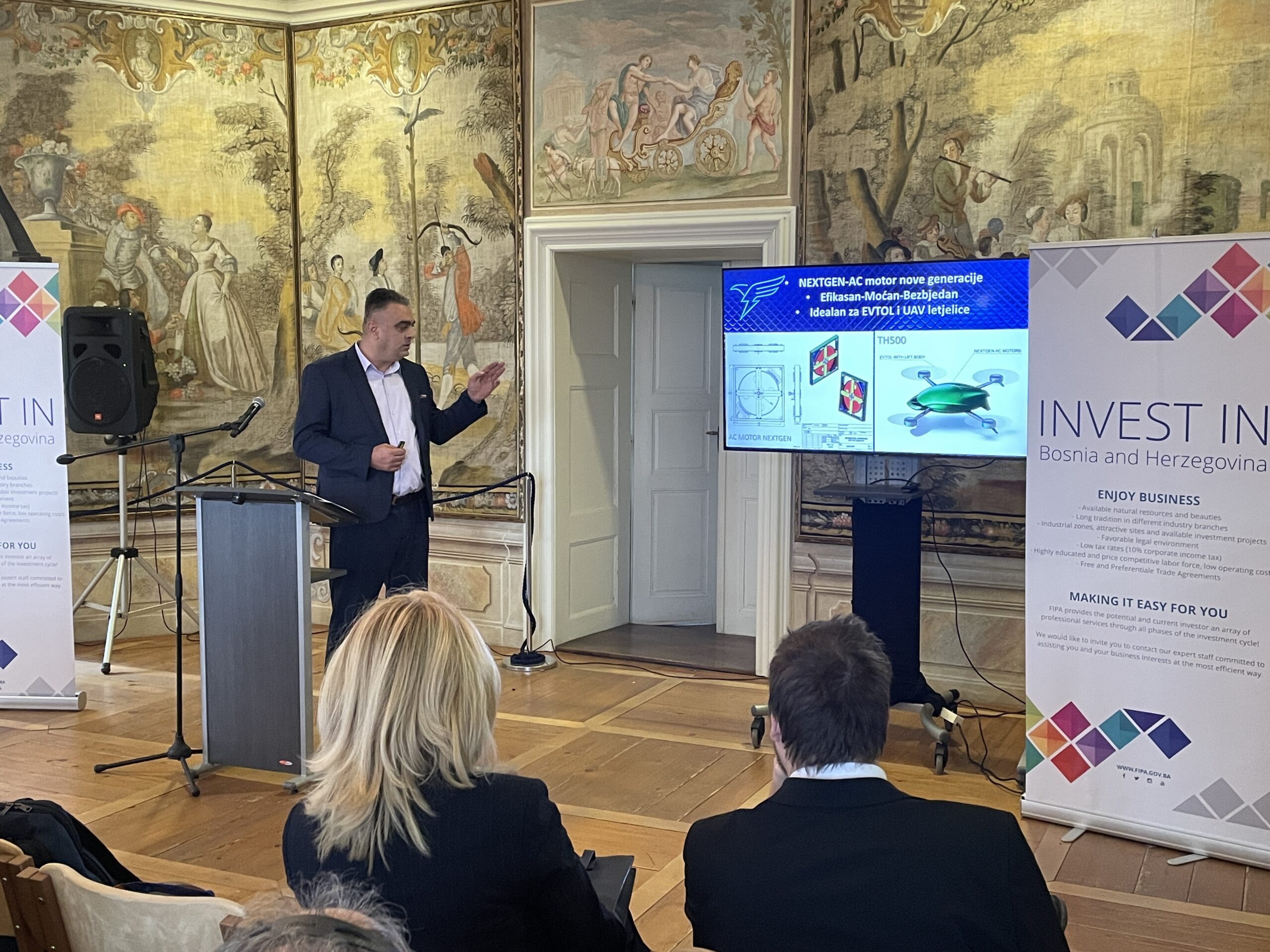
In the field of advanced mobility and aerospace technologies, Tesla Helicopters presented the TH500 EVTOL project, an electric vertical take-off and landing aircraft concept based on a next-generation AC propulsion system. The presentation outlined a phased development approach, ranging from unmanned cargo variants to piloted configurations, with defined investment stages, technical milestones and long-term certification objectives aligned with European aviation standards.
In line with its mandate, ICPE will seek to reflect the projects discussed during the event in its international communication and networking activities. ICPE will compile the proceedings of the event, including key presentations and contributions, which will be published in the forthcoming edition of its journal Public Enterprise, ensuring broader dissemination of the insights and project proposals presented during the event.